October 2021 ~ WalkBrazil4K Travel Blog
  • Brasilia,Brazil

    Eixo Monumental

  • Rio de Janeiro, Brazil

    Christ The Redeemer

  • Sao Paulo,Brazil

    Municipalidade

Sunday, October 31, 2021

Some Facts About The Brazilian Army (Exército Brasileiro)

The Brazilian Army (Portuguese: Exército Brasileiro) is the land arm of the Brazilian Armed Forces. The Brazilian Army has fought in several international conflicts, mostly in South America during the 19th century. In the 20th century, it fought on the Allied side in World War I and World War II. Aligned with the Western Bloc, during the time of military dictatorship in Brazil from 1964 to 1985, it also had active participation in the Cold War, in Latin America and Southern Portuguese Africa,as well as taking part in UN peacekeeping missions worldwide since the late 1950s.

Domestically, besides having faced several rebellions throughout these two centuries, with support of local political and economic elites, it also ended the monarchy and imposed on the rest of society its political views and economic development projects during the periods that it ruled the country: 1889–94, 1930–50 (First Vargas period and Dutra years), and 1964–85.

Brazil's armed forces are the second largest in the Americas, after the United States, and the largest in Latin America and the Southern Hemisphere by the level of military equipment, with 334,500 active-duty troops and officers.


In Brazil, conscription is mandatory for every male who has turned 18 years old. It normally lasts for twelve months. But in practice people are not forced to serve against their will. Military service was first made mandatory in 1906, during Afonso Pena's government


Brazil operates the most respected Jungle Warfare training center in the world (CIGS)


Personnel

The Brazilian Army had a recorded personnel strength of 219,585 active personnel in 2014. Another estimate by the IISS in 2014 put that figure at 190,000 active personnel, with 70,000 of those being conscripts. In addition there were approximately 1,340,000 reserve personnel in 2014. This figure was down from 1,800,000 reserve personnel in 2008. In principle, the Brazilian Constitution designates the 400,000-strong Brazilian Military Police as a reserve force of the Army, although in practice they remain separate entities.

As of 2018 the size of the active component of the Brazilian Army was approximately 235,000 personnel in active service.


Conscription

According to Article 143 of the 1988 Brazilian Constitution, military service is mandatory for men, but conscientious objection is allowed. Women and clergymen are exempt from compulsory military service. At the year that they complete age eighteen, men are required to register for the draft and are expected to serve when they reach age nineteen. About 95 percent of those registering receive deferments. A growing number of recruits are volunteers, accounting for about two-thirds of the total. Those who serve generally spend one year of regular enlistment at an army garrison near their home. Some are allowed nine-month service terms but are expected to complete high school at the same time. These are called "Tiros de Guerra" or "shooting schools", which are for high school boys in medium-sized interior towns, run by army senior NCO, first sergeants or sublieutenants, and rarely a second lieutenant. In Brazilian Armed Forces, first sergeants may be promoted to the officers rank, as second lieutenant, first lieutenant and captain, becoming part of the Auxiliary Officers Corps. The army is the only service with a large number of conscripts; the navy and air force have very few.

The conscript system is primarily a means of providing basic military training to a sizable group of young men who then return to civilian life and are retained on the reserve rolls until age forty-five. The army recognizes that it provides a public service by teaching large numbers of conscripts basic skills that can be valuable to the overall economy when the young men return to civilian life.


Indigenous people in the Army

The genesis of the current Army in the fight against the foreign invader, in the 17th century, counted on the decisive participation of Felipe Camarão, named by the Portuguese court as Captain-Mor among the native indigenous peoples of Brazil. Along with Francisco Barreto de Meneses, André Vidal de Negreiros, Henrique Dias and João Fernandes Vieira, he was one of the patriarchs of the Brazilian Army.
Female soldier of the Brazilian Army in the 72nd Motorized Infantry Battalion.

In that sense, in the early 20th century, Marshal Cândido Mariano Rondon, a descendant of the Bororó, Terena and Guará ethnic groups, served in the Army. A pioneer of the Brazilian West and Amazonian frontiers, Rondon was noted for his respect for the indigenous peoples found in his exploratory missions. He is the Patron of the Signals Corps. Today's Army counts a number of ethnic community personnel among its ranks, especially in the western borders and the tough jungles of the Amazon.

Women in the Army

Women's participation in the Army is not without precedent. In 1823, Maria Quitéria de Jesus fought alongside other soldiers for Brazilian independence; during World War II (1939-1945), 73 Brazilian nurses served in various U.S. Army hospitals; and in 1992, the Brazilian Army Leadership Academy enrolled its first class of 49 women, admitting them into that institution's Auxiliary Officer Corps. Female service members were limited to support duties such as administration, health care, and teaching. The innovation is women's entry into combat career paths.

To begin a career with the army as officers, women must have completed a bachelor's degree in areas such as law, computer science, economics, or accounting. The competition is national in scope, and no applicant may be more than thirty-six years of age. Those accepted into the program study at the Army's School of Complementary Formation (former Army's School of Administration) in Salvador, beginning as first lieutenants (reserve). The School of Complementary Formation is also open to men. At the end of the one-year course, the graduate is promoted to first lieutenant in the permanent ranks. If starting a career in the enlisted ranks, any woman enlistee would be required to at least be a secondary school graduate. 


Friday, October 29, 2021

Delivery Driver Works For 14-16 hours everyday

I work 7-8hours in a day and even when I get home I am always tired and I just want to relax and Sunday is the only free day I have and I just want to relax I don’t want to even step outside, in the video, the man said many people have died from overworking themselves, they just collapse and die because they work for 14-16 hours every day, so to those abroad I know we have to pay bills but take it easy, working more than 8-9hours in one day is suicide.



Brazilian Lady Perfectly Handles 3 Guys

I love a lady that knows what she wants like the lady in the video and as many would want to pretend we know what they do under G, I love a self-confident woman and Brazilian women have self-confidence.


This Is What Spiritual Sacrifice (ebo) Looks Like in Brazil-Graphic Photos

As I told you before in Brazil many of them believe in our African spiritual religion and religion is not the cause of backwardness in any country, it is the politicians that are the problem, the issue is that in some countries in Africa the religious leaders don't speak out. I am a Christian but I believe in everyone's right to worship whatever they want to worship as long as they don't kill anyone, I only have a problem when your religion starts killing people.


Wednesday, October 27, 2021

Dont Miss The February 2022 Carnival Apply For Your Brazilian Visa Now

The 2022 Carnaval has been confirmed by some states the Carnaval is a big deal in Brazil and the country shuts down for days to celebrate and the Brazilian government pours billions of reais into the Carnaval and millions of people from all over the world come to Brazil to celebrate and remember this year Carnaval was canceled because of the pandemic, so expects next years Carnaval to be a very big one because the government have to kick start the economy, I would be there in Rio live and direct, so what are you waiting for go get your tickets now, send me a message on WhatsApp +556192711460


https://www.walkbrazil4k.com/2021/06/benefits-of-living-in-brazil.html


https://www.walkbrazil4k.com/2021/06/4-business-you-can-do-as-foreigner-in.html


Monday, October 25, 2021

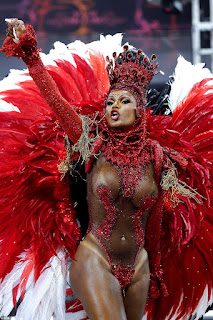
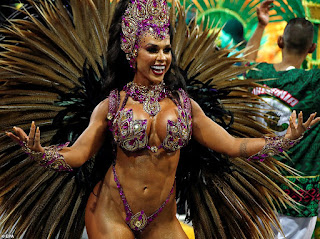
Sexy Women And plenty of skin are all on show at Rio's famous carnival

Sexy sequins and plenty of skin are all on show as Rio's famous carnival opens with its traditional spectacular samba dancing

  • The city's 13 top samba schools were competing for the title of carnival champions and pulled out all the stops
  • Thousands flocked to see the elaborate parades and dancers' spectacular costumes in the city's Sambadrome
  • The five-day Rio Carnival dates back to 1640 and is a spectacular celebration to mark the start of lent

Rio de Janeiro kicked off its annual carnival parades over the weekend in a swirl of glitter, sequins, and spectacular outfits.

The Brazilian city's 13 top samba schools were competing for the title of carnival champions and each had around one hour to wow spectators in the Sambadrome with elaborate shows and scantily clad dancers.

Thousands flocked to see the parades and competitions for the five-day celebration to mark the start of Lent.

Members of multiple parades represent different parts of the annual extravaganza, while men and women partake in an array of fascinating dances and performances. 

The Rio Carnival typically starts a week before Ash Wednesday with parties beginning in December, despite being heavily influenced by European and African traditions today.

The first one was held in the 1640s in honor of the Greek wine gods and saw the Romans organize events to celebrate Saturnalia and Bacchus. 

The first masquerade carnival took place in 1840 and saw influence from Italy's carnivals - with revelers dancing to the polka and waltz. Samba was then incorporated in 1917.  


copied:dailymail.co.uk
 

Rio de Janeiro mayor confirms Carnaval for 2022

The 2022 Carnaval has been confirmed by some states the Carnaval is a big deal in Brazil and the country shuts down for days to celebrate and the Brazilian government pours billions of reais into the Carnaval and millions of people from all over the world come to Brazil to celebrate and remember this year Carnaval was canceled because of the pandemic, so expects next years Carnaval to be a very big one because the government have to kick start the economy, I would be there in Rio live and direct, so what are you waiting for go get your tickets, read more below


Eduardo Paes knows how party-loving Cariocas are and that the prospect of Carnaval is the ideal carrot for the city's residents to apply pressure to those residents who have not decided to get vaccinated.


RIO DE JANEIRO, BRAZIL - The mayor of Rio de Janeiro, Eduardo Paes, confirmed in a speech Sunday (03) the schedule of celebrations in February and without significant restrictions, but only if the Covid numbers allow it.

"The only certainty we have is that we vaccinate everyone, and when everyone is vaccinated, life returns to normal. Who's going to distance themselves during Carnival?" he said.

CARROT AND STICK

With these statements, City Hall is increasing pressure on the small percentage of remaining citizens who have decided against Covid vaccination.

According to Rio City Hall, 99% of adults living in the .


 photo  credit:dailymail.co.uk

copied:riotimesonline.com


Saturday, October 23, 2021

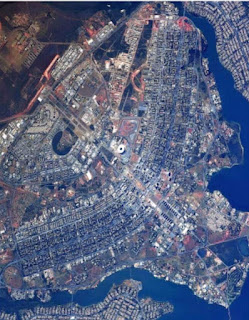
Weird and wonderful shapes of the World's most distinctive cities as seen from space

Satellite images show amazing intricacy of the world's most eye catching 'planned' towns and cities 

Imaginative layouts make some urban areas as distinctive from the sky as they are at ground level 

Designs show the skills of city planners over hundreds of years - from the Renaissance to the 1960s


At first glance some of these extraordinary satellite images could be mistaken for bizarre works of modern art rather than towns and cities that are home to millions of people.

From the elegant bird-shaped design of Brazil's capital Brasilia, to the circles and intricate diagonal grid pattern of downtown Washington DC - some of the greatest urban spaces on Earth look almost as distinctive from space as they do at ground level.

And the ingenuity of the architects who planned and designed them through the ages, from the Renaissance to the 1960s, can still be seen today.


Source:https://www.dailymail.co.uk/news/article-2241040/From-bird-star-perfect-square--weird-wonderful-shapes-Worlds-distinctive-cities-seen-space.html


Brasilia Brazil From Beautiful Views The Sky

Do you know Brasilia was built in the shape of a bird but later turned into a cross, many don't know that Brasilia is a planned city just like Abuja read more about this great city below


Brazil's first capital was Salvador; in 1763 Rio de Janeiro became Brazil's capital and remained so until 1960. During this period, resources tended to be centered in Brazil's southeastern region, and most of the country's population was concentrated near its Atlantic coast. Brasilia's geographically central location fostered a more regionally neutral federal capital. An article of the country's first republican constitution, dated 1891, states that the capital should be moved from Rio de Janeiro to a place close to the country's center.


The plan was conceived in 1827 by José Bonifácio, an advisor to Emperor Pedro I. He presented a plan to the General Assembly of Brazil for a new city called Brasilia, with the idea of moving the capital westward from the heavily populated southeastern corridor. The bill was not enacted because Pedro I dissolved the Assembly.


According to the legend, Italian saint Don Bosco in 1883 had a dream in which he described a futuristic city that roughly fitted Brasilia's location. In Brasilia today, many references to Bosco, who founded the Salesian order, are found throughout the city and one church parish in the city bears his name.


Juscelino Kubitschek was elected President of Brazil in 1955. Upon taking office in January 1956, in fulfillment of his campaign pledge, he initiated the planning and construction of the new capital. The following year an international jury selected Lúcio Costa's plan to guide the construction of Brazil's new capital, Brasilia. Costa was a student of the famous modernist architect Le Corbusier, and some of modernism's architectural features can be found in his plan. Costa's plan was not as detailed as some of the plans presented by other architects and city planners. It did not include land use schedules, models, population charts, or mechanical drawings; however, it was chosen by five out of six jurors because it had the features required to align the growth of a capital city. Even though the initial plan was transformed over time, it oriented much of the construction and most of its features survived.


Photo Credit: Minhabelabrasilia


Brazilian president made his dog sign law against animal cruelty

The Brazilian president, Jair Bolsonaro, sanctioned on Tuesday a law that toughens penalties for those who mistreat dogs or cats. The far-right leader resisted the measure but finally accepted pressure, among others, by his wife Michelle de Paula Firmo.

Several dogs were brought to the ceremony, including that of the Bolsonaro family, Nestoras well as a pit bull whose hind legs were cut off with a machete in July in a city in southeastern Brazil.

“I never had doubts as to whether or not I was going to sanction, even because I learned of the approval in Congress by the first lady,” Bolsonaro said, smiling and looking almost guiltily at his wife, present at the ceremony in which stamped his signature on the law with his dog in his arms, although the dog did not seem to feel very comfortable.

“This fills a gap on the mistreatment of animals, an unspeakable thing that other animals that believe they are rational do,” declared the ruler.

Pressure by Michelle Bolsonaro

Brazilian legislation establishes penalties of between three months and one year in prison for the mistreatment of animals, but this new text raises the punishment to a maximum of five years, although only when the aggressions are suffered by dogs or cats. In addition, it prohibits the possession of animals to convicted persons.

Bolsonaro initially hinted that he would veto the law since he considered that the penalties of up to five years in prison for those who mistreat these animals were exaggerated. “Whoever abandons a newborn has a sentence of six months to three years. So, how who mistreats a dog or a cat is going to spend up to five years in jail, “he said about twenty days ago.


copied:archyde.com


Friday, October 22, 2021

People Living In Non-English Speaking Countries How Do You Cope

Language has never been a barrier to me and I knew what I was going in for when I decided to come to Brazil so I am not complaining, but even Brazilians in the USA also go through what we are going through in Brazil.


Have you ever been in a situation where you can't defend yourself because of the language? one time I was waiting outside a supermarket for my uber ride and I was standing close to the place marked for bikes and this woman wanted to park her car in the bike space, I didn't move and she parked in front of me, I wanted to blast her but because I could not understand the language back then I just kept quiet. lol


One time I was on a bus and I stayed close to the window, so I won't miss my bus stop only migrants would understand me better, lol. I pressed the stop button and it didn't work, I never knew there is a rope above that you can pull because the button does not work anymore, I could not shout, I had to stop at the next bus stop which was not far if it was in Lagos or in an English speaking country I would have talked to the bus driver.

Thursday, October 21, 2021

do you know that sao paulo brazil has 40,000 high rise buildings

The city of São Paulo is not only the largest city in Brazil but also the largest in the Americans and western hemisphere. Within the city and its metropolitan area, there are at least 900-1500 buildings taller than 100 meters and over 20,000-40,000 high rise buildings,mostly concentrated in the downtown along the Paulista Avenue and in the neighborhood of Brooklin. At one time, the city was home to the tallest building in Latin America, the Martinelli Building, which opened in 1929 at a height of 130 meters. 


The Mirante do Vale, the largest building in the city, is 170 meters in height and was opened in 1960. Today, São Paulo is a city of low buildings, which rarely reach more than 120 meters and are mostly residential in nature. Municipal laws limit the construction of large skyscrapers. The city of São Paulo has the 5th highest number of buildings in the world taller than 100 meters, behind Hong Kong, Shanghai, Chongqing, and Seoul.